Commercial & Industrial Solar Power Plant Solutions
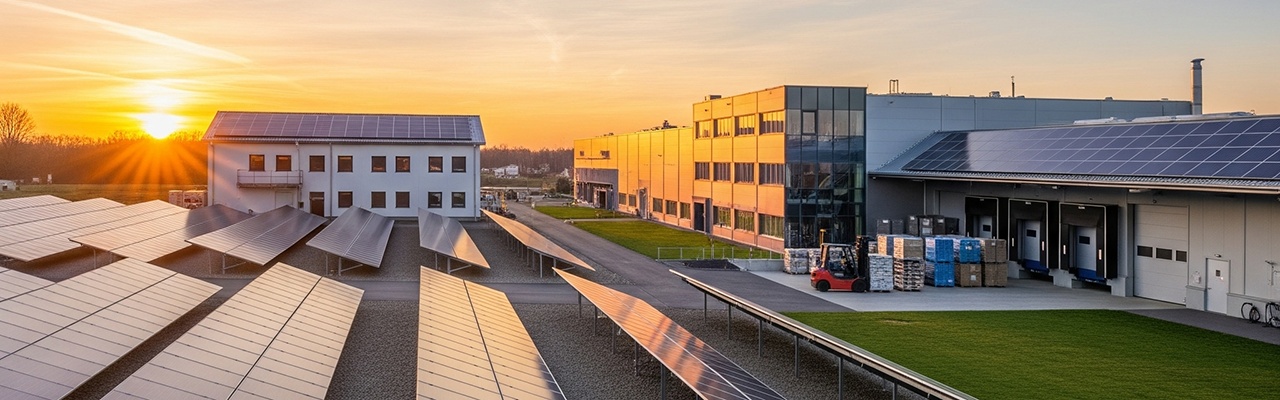
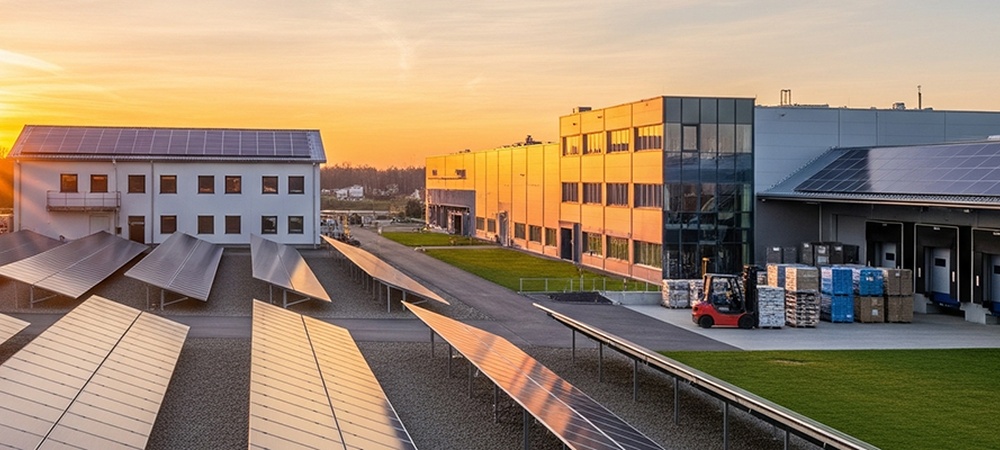
Commercial and industrial solar power plants are large-scale energy systems designed to meet the high power demands of businesses, factories, warehouses, and institutions. These systems offer a sustainable and cost-effective solution for reducing energy expenses, enhancing energy security, and supporting corporate sustainability goals.
Advanced technologies like TOPCon (Tunnel Oxide Passivated Contact) solar panels are now being widely adopted in commercial and industrial installations. Known for their superior efficiency and reliability, TOPCon panels perform well even in challenging conditions such as high temperatures and low-light environments. By integrating TOPCon panels, businesses can maximize energy output, optimize space usage, and achieve faster returns on their solar investment.
Types of Solar Power Plants
Commercial and industrial facilities can choose from three main types of solar systems: on-grid, off-grid, and hybrid systems. An on-grid system connects directly to the utility grid, allowing businesses to feed excess energy back into the system through net metering. This is the most commonly used type for commercial setups due to its cost-efficiency. An off-grid system is completely independent and relies on battery storage, suitable for industries in remote locations with unreliable grid access. A hybrid system combines grid connectivity with battery backup, ensuring continuous power during outages while still allowing grid interaction.
Guidelines
Before installation, a detailed energy audit should be conducted to understand the facility’s power consumption patterns. It’s crucial to analyze roof or ground space, check for shading, and assess structural capacity. Compliance with local electricity board rules, building regulations, and safety standards is mandatory. Companies should also evaluate the financial feasibility, considering long-term savings, payback period, and available government incentives or tax benefits for commercial solar adoption.
Technologies
Commercial and industrial plants use high-efficiency monocrystalline or bifacial solar panels for maximum output. These systems often include central inverters for large-scale power conversion or string inverters for segmented control. Solar tracking systems are used to adjust panel angles throughout the day, increasing energy capture. For storage, lithium-ion and lead-acid batteries are common, depending on budget and power backup requirements. Smart energy management systems and monitoring platforms are also integrated for real-time performance tracking and analytics.
How to Design?
Designing a commercial or industrial solar power system involves several steps. Start with a comprehensive energy demand assessment, including peak load analysis and power usage trends. A site survey is conducted to evaluate space availability, orientation, and shading. Based on this data, engineers calculate the optimal system size, panel layout, and inverter capacity. Structural assessments are carried out to ensure the roof or mounting area can handle the load. The final design includes detailed electrical diagrams, component selection, and safety features.
Integration
Integration focuses on connecting the solar plant with the facility’s electrical infrastructure and the local power grid. In on-grid systems, net metering or power purchase agreements (PPAs) are established to manage energy flow. For hybrid systems, the design includes battery banks, charge controllers, and backup strategies. Modern setups include energy management systems (EMS) that allow businesses to monitor consumption, schedule operations based on solar availability, and reduce peak demand charges. Integration also ensures compatibility with generators or other power sources, if needed.
Inspection
A multi-stage inspection process is critical for commercial and industrial solar installations. It begins with a pre-installation site inspection to verify technical and safety requirements. After installation, a commissioning inspection is performed to test system functionality, check electrical safety, and verify structural stability. For grid-connected systems, local utility providers conduct a final inspection before granting grid synchronization approval. Regular third-party inspections or audits may also be carried out to ensure ongoing compliance and performance.
Maintenance
Commercial solar power plants require regular maintenance to ensure reliability and high performance. This includes cleaning solar panels every 2–3 months to remove dust and debris, which can reduce efficiency. Routine inspections of wiring, mounting structures, inverters, and batteries help prevent technical issues. Advanced systems are often connected to remote monitoring platforms that send alerts for faults or performance drops. Annual servicing by qualified technicians ensures system health, helps maintain warranty conditions, and extends the plant's lifespan.
Get our support
Contrary to popular belief, Lorem Ipsum
is not
simply random text.
Project Execution Management
Engineering & Designing Services
For the successful implementation of any project requirement there must be an engineer’s support. We offer you the most experienced & reputed consultants for solar power plant development in designing, managing & risk redemption. Such a protocol will be helpful in finding the optimum BOM, ideal standards, precise design etc. and also it will eliminate so many risks involved in the complete process. This will be helpful in saving the time & cost in the execution of the projects.
Click to details
Support of Technicians, Supervisors & Helpers for Project Integration, Various Categories
We provide access to qualified and experienced professionals who support various technical and supervisory activities required for project development. Our workforce includes specialists in solar energy systems, security solutions, automation, networking, smart home technologies, and other related fields. They help ensure that projects are completed efficiently, safely, and according to industry standards.
All technicians, supervisors, and support staff associated with us are carefully selected and verified based on their skills, experience, and work history. Their proven track record allows us to maintain high standards of workmanship and deliver reliable results across different types of projects. We focus on providing skilled personnel who can contribute positively to project quality and successful execution.
Our workforce services are available at locations based on your project requirements. Whether you need technical support for a small installation or manpower for a large-scale project, we ensure dependable service with professional responsibility. With experienced personnel and proper supervision, we help clients complete their projects smoothly, on time, and with confidence.
Click to details