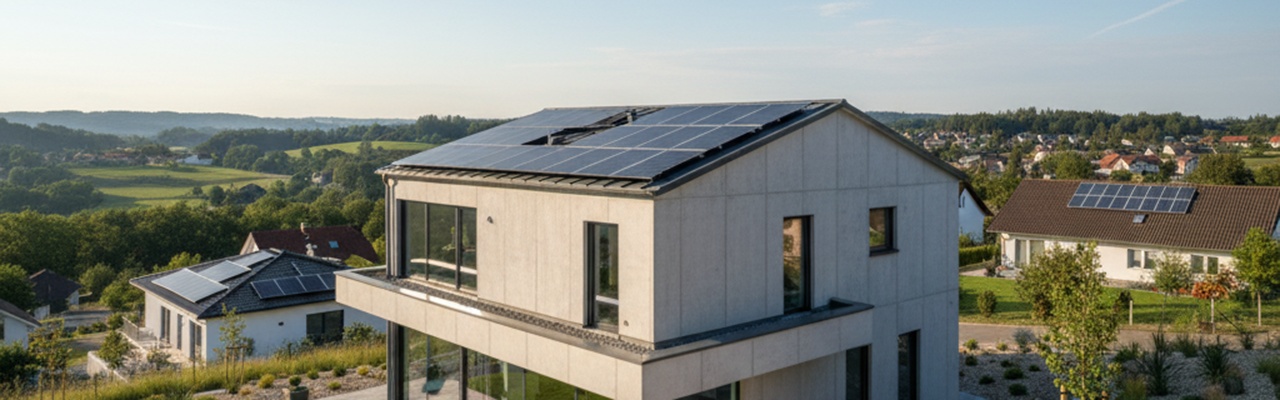
Domestic Solar Power Plant Solutions
Domestic solar power plants are designed to generate electricity for homes using sunlight. They offer a sustainable and cost-effective alternative to traditional power sources, helping homeowners reduce monthly electricity bills while promoting a greener lifestyle. With proper installation, these systems can significantly lower grid dependence and contribute to long-term energy savings.
Modern systems now include advanced technologies like TOPCon (Tunnel Oxide Passivated Contact) panels, known for their high efficiency and better performance in low-light and high-temperature conditions. When paired with hybrid inverters, which manage both solar power and battery storage, homeowners gain the flexibility to use stored power at night or during outages. This combination ensures maximum energy utilization, greater reliability, and smarter control over household energy use.
Types of Solar Power Plants
There are mainly three types of domestic solar power plants: on-grid, off-grid, and hybrid systems. An on-grid system is connected to the main electricity grid and allows users to feed excess energy back into the system through net metering, helping reduce monthly electricity bills. An off-grid system works independently from the grid and uses batteries to store electricity for later use, making it ideal for remote or rural areas. A hybrid system combines the benefits of both on-grid and off-grid setups by storing power in batteries and also feeding surplus energy to the grid, ensuring energy availability even during power cuts.
Guidelines
Before installing a domestic solar power plant, it is important to assess the available roof space, direction, and shading to ensure maximum sunlight exposure. Homeowners should calculate their daily electricity consumption to determine the right system size. It's essential to choose a system that matches your energy needs, location, and budget. Additionally, check if you’re eligible for government subsidies or incentives and ensure compliance with local electricity board regulations and building codes.
Technologies
Domestic solar power plants use various technologies to deliver efficient performance. Monocrystalline solar panels offer high efficiency and a compact design, making them suitable for limited roof space. Polycrystalline panels are slightly less efficient but more cost-effective and work well when more roof space is available. For systems that use energy storage, lithium-ion batteries are preferred due to their long life and faster charging capability. The inverter is a crucial component that converts the solar-generated DC power into usable AC power for home appliances, and it comes in different types like string and micro-inverters.
How to Design?
Designing a domestic solar power plant starts with evaluating your monthly electricity consumption, usually found on utility bills in kilowatt-hours (kWh). Next, a site inspection should be done to check the roof’s orientation, angle, and any possible shading. Based on energy needs and available space, you can determine the system size. Then, select suitable components such as panels, inverters, mounting structures, and batteries. Finally, create a layout plan that ensures the most efficient placement of panels and wiring routes for safe installation.
Integration
Integration involves connecting the solar power system with your home’s electrical setup. In on-grid and hybrid systems, net metering is installed to track electricity usage and feed excess energy back to the grid. This helps reduce power bills and increases savings. Some systems also include smart monitoring tools, such as mobile apps or web dashboards, allowing users to track performance, energy production, and savings in real-time. Proper integration ensures safety, efficiency, and compliance with local energy standards.
Inspection
A thorough inspection process is important for successful installation and operation. An initial inspection is done to confirm that the site is suitable for solar panel installation. During and after installation, technicians check for correct panel angles, secure mounting structures, proper wiring, and safe electrical connections. Finally, a government inspection may be required for systems connected to the grid to ensure they meet safety standards and qualify for net metering or subsidies.
Maintenance
Maintaining a solar power plant is simple but essential for long-term performance. Cleaning the panels every few weeks helps remove dust and debris that may block sunlight and reduce efficiency. It’s recommended to conduct an annual system check-up to examine wiring, inverter performance, and structural integrity. If your system includes batteries, regularly check their charge levels and condition. Additionally, monitor system performance through tracking tools to quickly detect and resolve any issues, ensuring smooth operation year-round.
Get our support
Contrary to popular belief, Lorem Ipsum
is not
simply random text.