Off-Grid Solar Power Systems
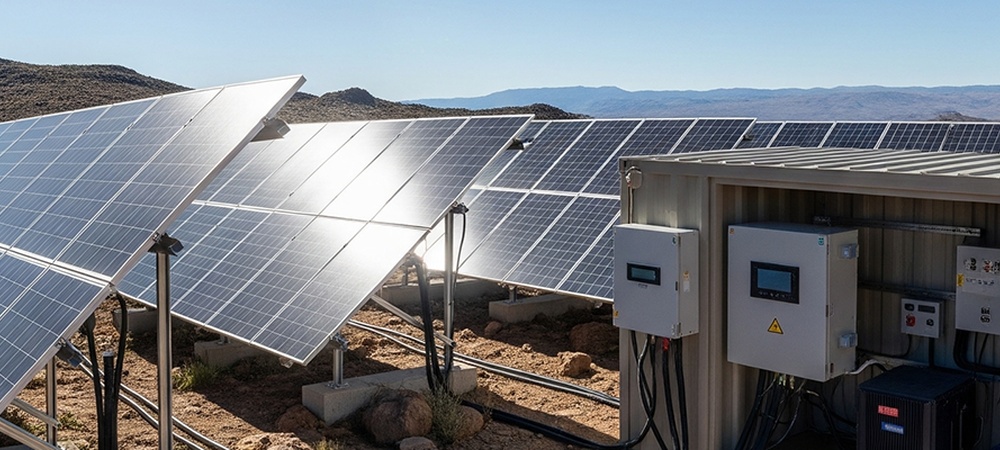
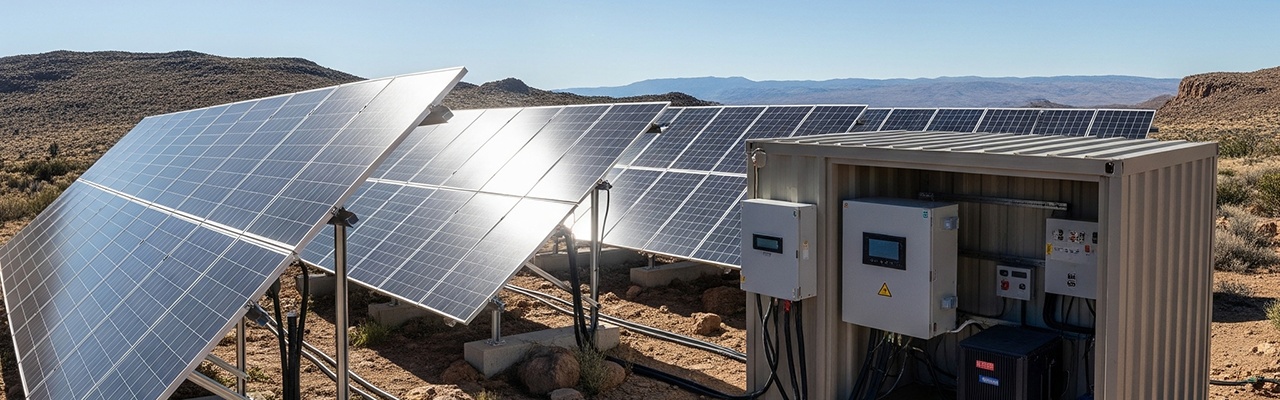
Off-grid solar plants are standalone systems that operate independently from the public electricity grid. These systems generate and store solar energy to power homes, businesses, or remote facilities in areas without grid access. By relying entirely on solar power, off-grid systems ensure continuous electricity supply through integrated energy storage, typically using batteries. To maximize energy generation, the solar panels are installed at an optimal tilt angle based on the latitude and longitude of the location. This angle setting ensures that the panels receive the highest possible amount of sunlight throughout the year, improving the efficiency and performance of the system.
Technologies:
Off-grid solar systems typically include solar photovoltaic (PV) panels, charge controllers, batteries, and inverters. Modern systems use lithium-ion or advanced lead-acid batteries for energy storage. MPPT (Maximum Power Point Tracking) charge controllers are often used for better energy harvesting. Hybrid inverters are sometimes integrated to allow connections with diesel generators for backup during long periods of poor sunlight. Smart monitoring systems are also incorporated for performance tracking and system diagnostics.
Advantages & Disadvantages:
The main advantage of off-grid solar plants is their ability to provide reliable power in remote or rural areas where grid connectivity is unavailable or unstable. They offer energy independence, eliminate monthly electricity bills, and are environmentally friendly. However, these systems require significant upfront investment due to the need for large battery banks and advanced control systems. They also demand careful energy usage planning and regular maintenance to ensure optimal performance. Energy availability depends on sunlight and battery capacity, making power management critical.
Guidelines:
Before setting up an off-grid solar plant, assess the site’s solar potential and daily energy consumption needs. Choose a location with consistent sunlight exposure and ensure enough space for solar panels and battery banks. Battery sizing and storage should account for several days of autonomy to handle cloudy weather. Safety measures, such as proper ventilation for batteries and weatherproof housing for electrical components, should be strictly followed. Additionally, all components must meet relevant electrical standards and be installed by trained professionals.
Design:
Designing an off-grid solar plant begins with a load analysis to calculate the total energy demand and usage patterns. Based on this, the solar panel capacity and battery bank size are determined. The system must be designed to generate enough energy to charge the batteries fully and support consumption during night and low-sunlight hours. The inverter must be sized to handle peak load requirements. Proper spacing and orientation of panels, along with redundancy in storage or backup options, are considered to ensure reliability and efficiency.
Integration:
Off-grid systems are self-contained, but their integration focuses on ensuring seamless energy flow between solar panels, batteries, and loads. The inverter connects to the home or facility’s electrical system, while the charge controller manages battery charging and discharging. Some systems are hybridized with diesel generators or wind turbines to improve reliability. Smart controls and energy management systems are often integrated to prioritize loads, monitor consumption, and optimize battery usage.
Inspection:
Regular inspections are crucial for the safety and efficiency of off-grid systems. Visual inspections should check for panel cleanliness, structural integrity, and secure wiring. Battery health, inverter status, and performance logs should be reviewed periodically. Functional testing ensures all components are operating correctly and efficiently. Inspections should be conducted monthly, with a comprehensive system audit at least once a year by a qualified technician.
Maintenance:
Maintenance of off-grid solar plants includes cleaning the solar panels to prevent dust and debris from reducing output. Battery banks require regular checks for electrolyte levels (if applicable), temperature regulation, and terminal corrosion. Inverter and controller firmware should be updated periodically. System performance should be monitored to detect drops in efficiency or component failure. Preventive maintenance helps extend the life of the system and reduces the risk of sudden outages.