Important Things to Consider:
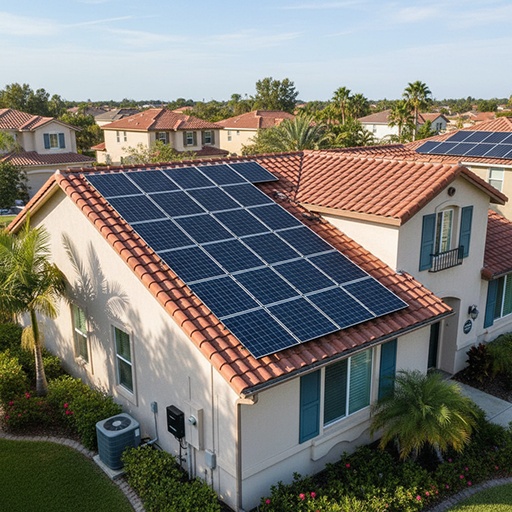
Designing a 3 kW on-grid system involves understanding average daily consumption, available roof space, and sunlight exposure. The system usually includes 6 solar panels (500–570W each), a string inverter, AC & DC protection devices, and net metering.
Applications include urban homes, villas, and small offices, especially where grid power is reliable. Ensure use of 4 to 6 sq.mm DC cables, MC4 connectors, SPD (Surge Protection Devices), ACDB (AC Distribution Board), and DCDB (DC Distribution Board). Mounting structures should be galvanized iron (GI) or anodized aluminum for corrosion protection and long-term strength.
Roof orientation and panel tilt must be optimized based on location (tilt angle b/w 10-15 degree) for maximum generation.
New Technologies
New-age 3kW solar systems now come equipped with high-efficiency components designed to maximize energy generation and long-term performance. Mono PERC, TOPCon (Tunnel Oxide Passivated Contact), and half-cut cell solar panels are becoming the new standard, offering superior output in low-light conditions, higher efficiency, and longer durability. Trusted panel manufacturers like Adani, Rayzon, Vikram, and RenewSys provide reliable solutions backed by solid warranties and proven technology.
Modern systems also include advanced string inverters with Wi-Fi or Bluetooth connectivity, allowing users to monitor real-time energy production and system performance through mobile apps. Many setups now use hybrid inverters, which intelligently manage power from solar panels, batteries, and the grid—ensuring uninterrupted energy availability even during power cuts. For rooftops with shading or complex layouts, micro inverters are a smart option, as they operate independently on each panel to optimize output and improve overall system efficiency.
Additional innovations include smart net meters for accurate energy tracking, automated cleaning systems to maintain panel performance, and IoT-enabled inverters that provide instant fault alerts, grid disconnection reports, and detailed energy analytics. These features help homeowners track usage, detect issues early, and optimize system performance with ease.With these cutting-edge technologies, today’s solar systems are more intelligent, efficient, and future-ready—offering greater control, safety, and long-term savings for homeowners.
Best Brands (Each Component with Advantages, Technology, and Expertise)
LONGi Solar
LONGi is a global leader in monocrystalline solar panel manufacturing. Their Hi-MO series features PERC and Half-cut Cell technology for high efficiency, excellent low-light performance, and enhanced durability. LONGi panels are ideal for residential rooftops due to their compact size and superior build quality.
Adani Solar (India)
Adani Solar is one of India’s largest integrated solar companies, manufacturing high-quality solar cells and modules. Their panels feature Mono PERC and multi-busbar (MBB) technology, offering high conversion efficiency, better low-light performance, and enhanced structural strength. Adani panels are known for their robust build quality, long-term performance, and resistance to PID (Potential Induced Degradation). With strong backward integration and in-house R&D, Adani provides reliable and cost-effective solar solutions suited for Indian climates. Their bankable brand reputation and extended warranties make them a preferred choice for both residential and commercial installations.
Rayzon Solar (India)
Rayzon Solar is a fast-growing Indian solar panel manufacturer, specializing in Mono PERC and TOPCon technology modules. Their panels deliver high efficiency, improved thermal performance, and better yield in partial shade and diffused light conditions. Rayzon's commitment to advanced cell technology, automated production lines, and strict quality control ensures panels with excellent durability and minimal degradation. Designed with Indian conditions in mind, Rayzon offers lightweight yet sturdy modules backed by competitive warranties and strong customer support—making them a reliable option for residential rooftops and small-scale commercial projects.
Trina Solar
Known for high-efficiency modules using N-Type and Mono PERC technology, Trina’s panels offer up to 21.5% efficiency and strong PID resistance. They are TIER-1 rated, with a proven global track record and robust warranty support.
Waaree Energies (India)
A trusted Indian brand offering cost-effective panels with mono and polycrystalline options. Waaree’s EL-tested modules ensure minimal micro-cracks and improved longevity. Their customer service network is strong across India.
Vikram Solar (India)
Another top Indian manufacturer, Vikram Solar’s SOMERA series (Mono PERC) panels are known for their reliability and long life. Their modules undergo stringent quality tests and are ideal for Indian weather conditions.