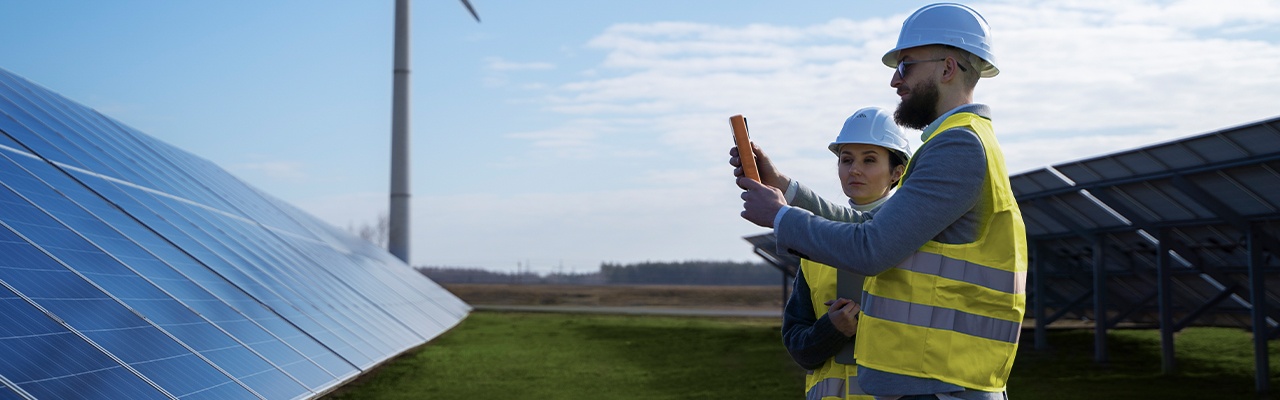
Let’s Study & Analyze Your Requirement – Solar Plants
1. How to Do a Site Survey?
Before installing a solar plant, a thorough site survey is conducted. This involves checking your rooftop or ground area to assess how much space is available. We examine the direction of the sun and identify any shadows from trees, buildings, or other obstructions that could affect performance. We also inspect the roof’s strength and ensure there is enough space to safely fix wiring and other components. In addition, we analyze your electrical data, including the age and condition of existing wiring, possible leakage risks, and details about your appliances. This comprehensive assessment helps us design a safe, efficient, and reliable solar system tailored to your specific needs.
2. Important Things to Note
It’s important to check your average electricity bill for the past few months and understand your pattern of consumption. We also consider the number of family members and key appliances you use regularly, such as ACs, electric vehicles, geysers, and more. We ask if you want power backup during outages and whether you have any plans for future upgrades to your electrical load. Your budget, local weather conditions, and whether your electricity provider allows net metering (feeding extra power back to the grid) are also important factors. Additionally, we assess your roof type, any shadows cast by nearby structures or trees, and the height of your building. We carefully plan the ideal locations for installing the inverter, solar plant, cabling, earthing, and other components to ensure maximum efficiency, safety, and ease of maintenance. These details help us design the best solar system tailored to your specific needs.
3. Deciding the Type of Solar System
There are different types of solar plants. On-Grid systems work with your electricity connection and help reduce your bill by feeding excess power back to the grid; they are ideal for homes and businesses with reliable grid access. Off-Grid systems operate independently using batteries, providing reliable power backup during outages—perfect for remote areas or places with frequent power cuts. Hybrid systems combine both On-Grid and Off-Grid features, offering flexibility to save on energy costs while ensuring backup power when needed, suitable for homes and commercial setups looking for uninterrupted power. There are also systems with Micro Inverters, which optimize the performance of each panel individually and are especially useful when part of your roof is shaded. We help you choose the best system type based on your location, power needs, and budget.
4. How to Decide the Size (Capacity)?
We check how many electricity units you use every month. For example, if you use 600 units, a 5kW plant may be suitable for you. We also consider key appliances you use, the number of users or family members in your home, and any energy loss due to shading on your panels. Additionally, we assess how much sunlight your home receives and the available roof space. If you plan to add new appliances or an electric vehicle in the future, we factor that into the system size. We also check for any energy leakage in your existing electrical setup. If you want backup during power cuts, we help you choose the right battery size to provide power for 4 to 6 hours or more.
5. Wire Size and Equipment Quality
All parts of the solar plant should be of good quality. For wiring, AI (Aluminum) DC cables are commonly used for the low voltage side, while copper (Cu) AC cables ensure safe and efficient transmission on the high voltage side. For earthing, copper cables with a minimum size of 10 sq.mm are recommended to provide reliable grounding. Underground (UG) cables are also used for protecting wiring in external or buried installations. Cable gauges typically range from 4 sq.mm, 6 sq.mm, 8 sq.mm, and higher depending on the system size and current load. Using the correct cable size and type helps prevent overheating, reduces energy loss, and ensures the system operates safely and efficiently for many years. All components, including panels, inverters, batteries, and cables, must meet relevant safety standards to maintain system reliability and longevity.
6. Choosing the Right Brands
Good brands give better performance and longer life. For solar panels, we suggest Renew, Waaree, Vikram Solar, Adani, or RenewSys, most of which come with a 30-year warranty for lasting reliability. For inverters, brands like Deye, Fox Ess, Sungrow, Fronius, Growatt, and Luminous are very reliable and typically offer 5 to 10 years warranty. Micro inverters from Enphase come with an extended 25-year warranty (15 years standard plus 10 years extended), ensuring long-term performance. These trusted brands also provide excellent service support whenever needed.
7. Maintenance Tips
Solar plants require minimal maintenance, but regular care helps ensure they perform well and last longer. It’s important to clean the panels every 10 to 15 days to remove dust and debris that can reduce efficiency. Regularly monitor the inverter display to confirm the system is operating correctly. For systems with batteries, check that the batteries are clean, properly charged, and functioning well. Scheduling a professional technician visit once or twice a year for a comprehensive inspection and maintenance is highly recommended to keep your solar system in optimal condition.